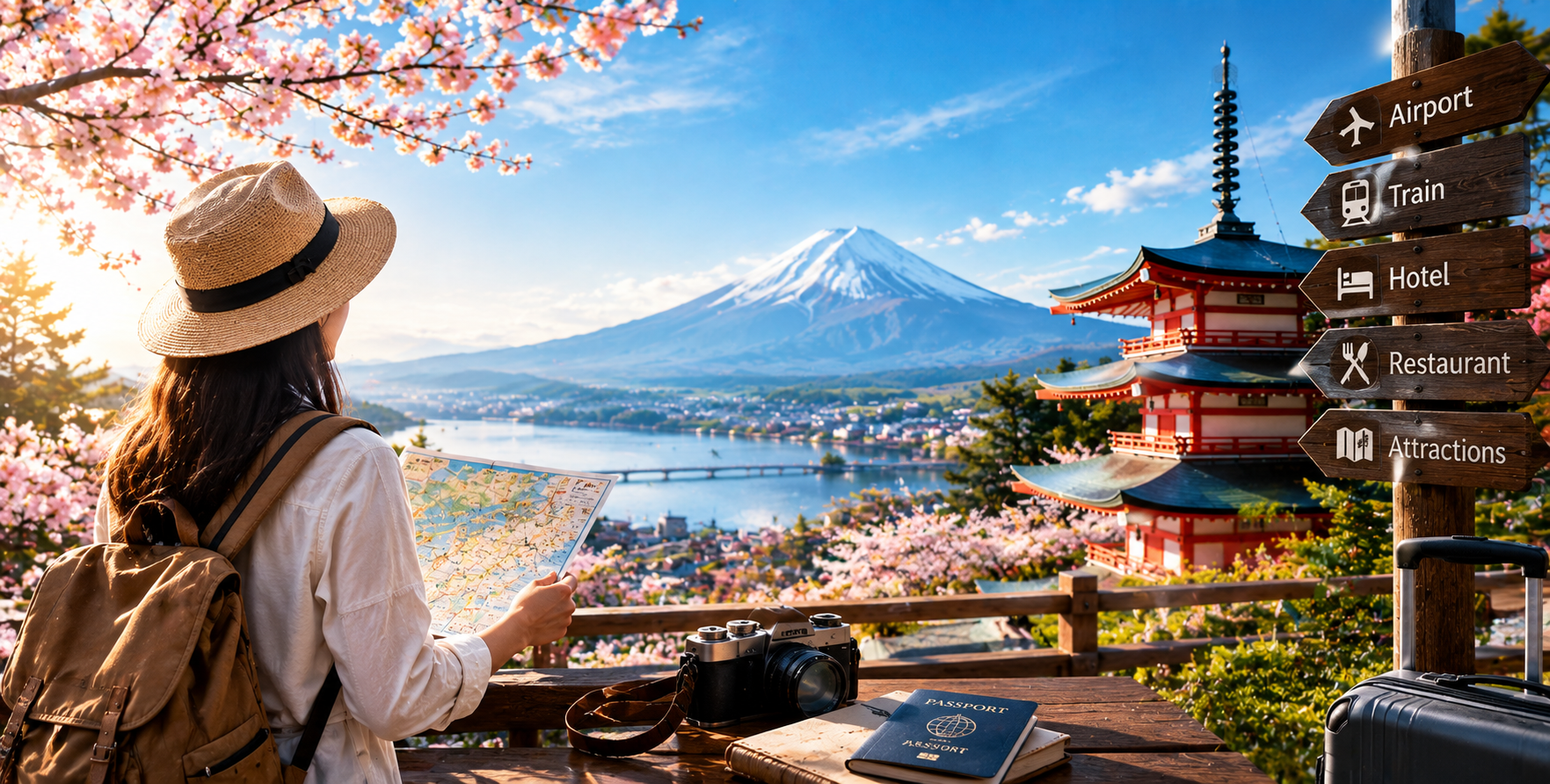
March–May
Average temperature: approximately 14℃
The season of cherry blossoms. It is advisable to bring an extra layer for cooler mornings and evenings.
Before Your Travel
How to Enjoy Japan Comfortably
Japan's climate varies significantly by region. The following is a general guide to the seasons.
Spring
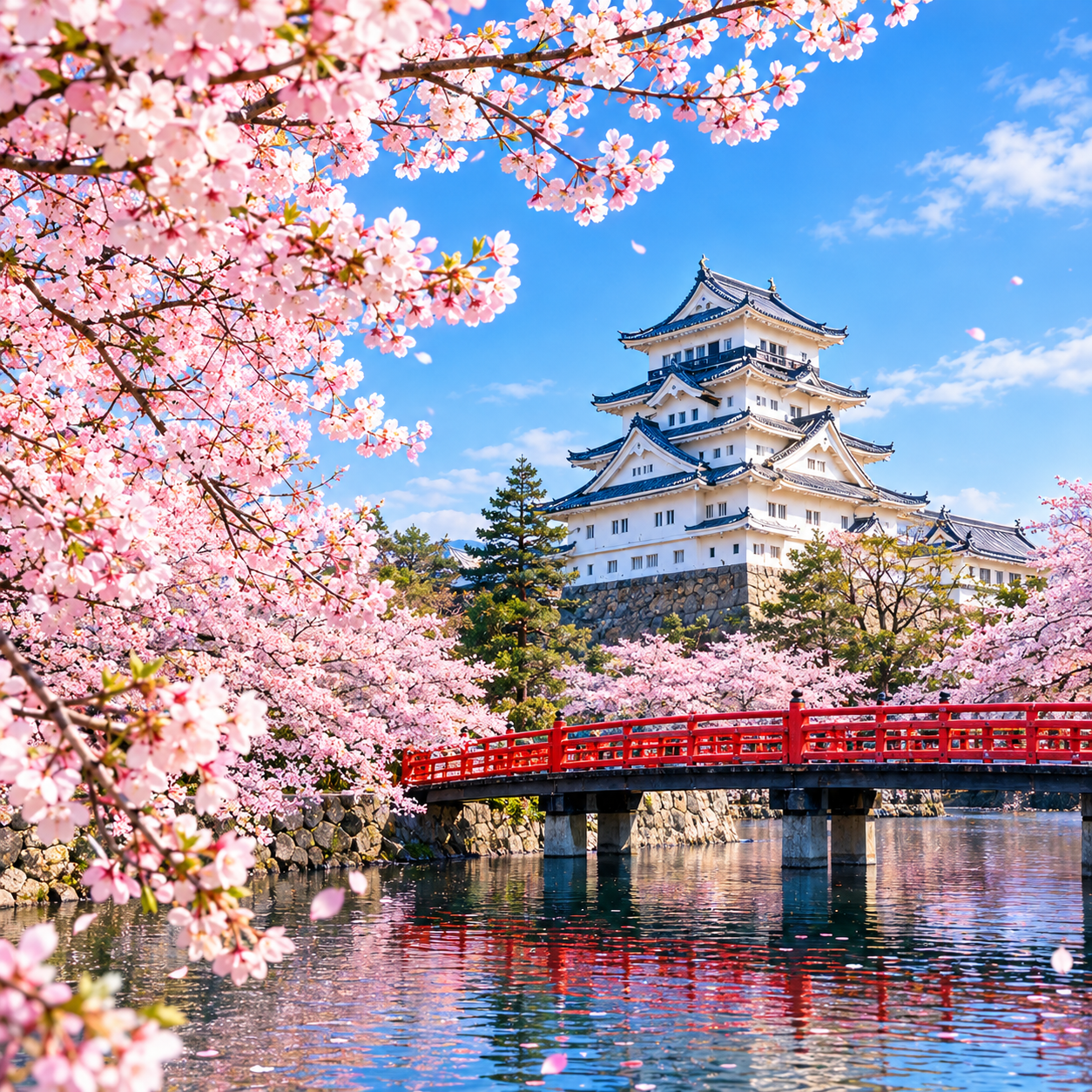
Rainy Season

June–July
Much of Japan experiences a rainy season, known as tsuyu, generally from June to July.
Weather can be humid, with frequent rain. A compact umbrella or rain jacket can be useful.
Summer
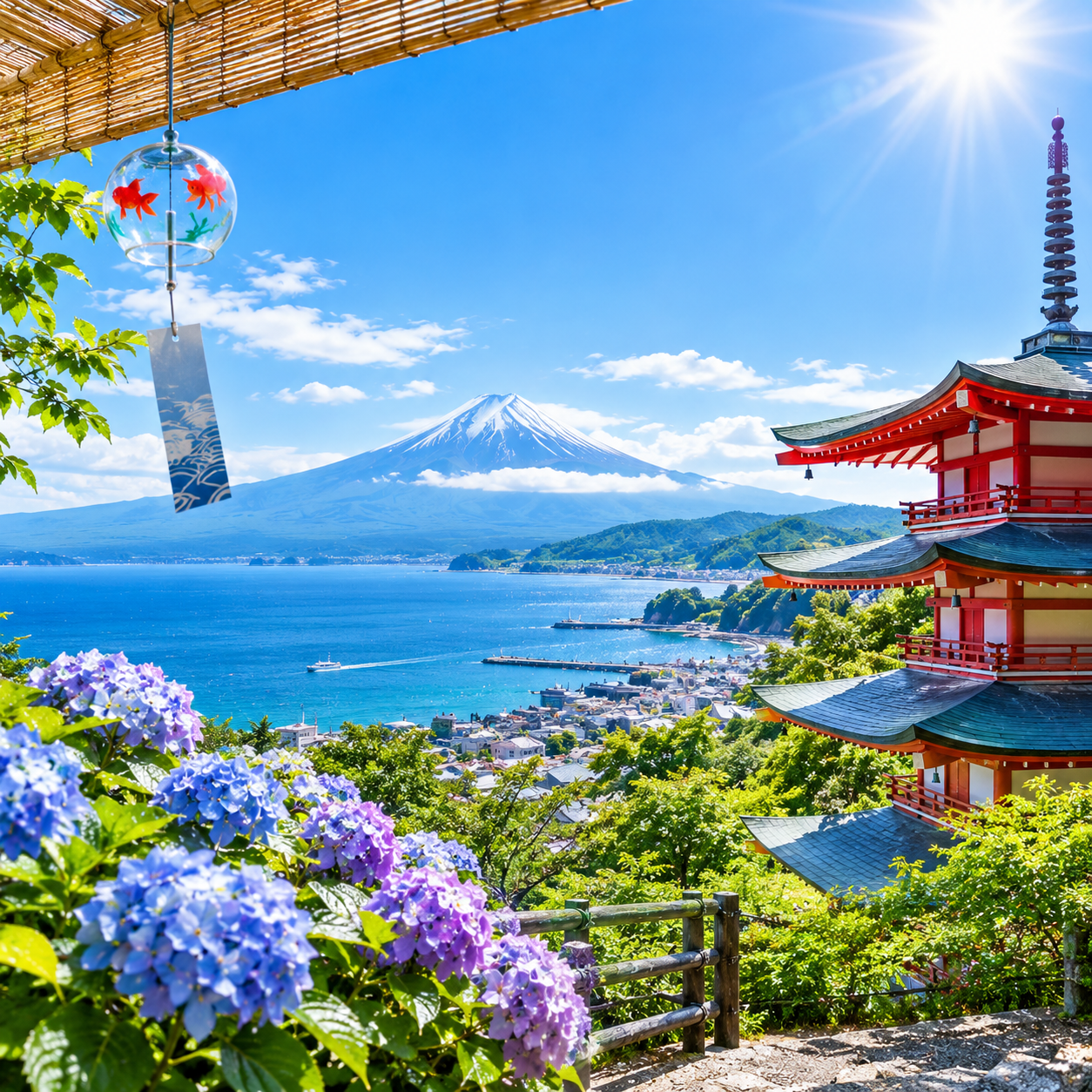
July–August
Average temperature: approximately 30℃
Hot and humid. Lightweight clothing and protection from the sun are recommended. Typhoon season typically runs from July through October, so it’s a good idea to check the forecast in the days leading up to your trip and build some flexibility into your itinerary.
Autumn
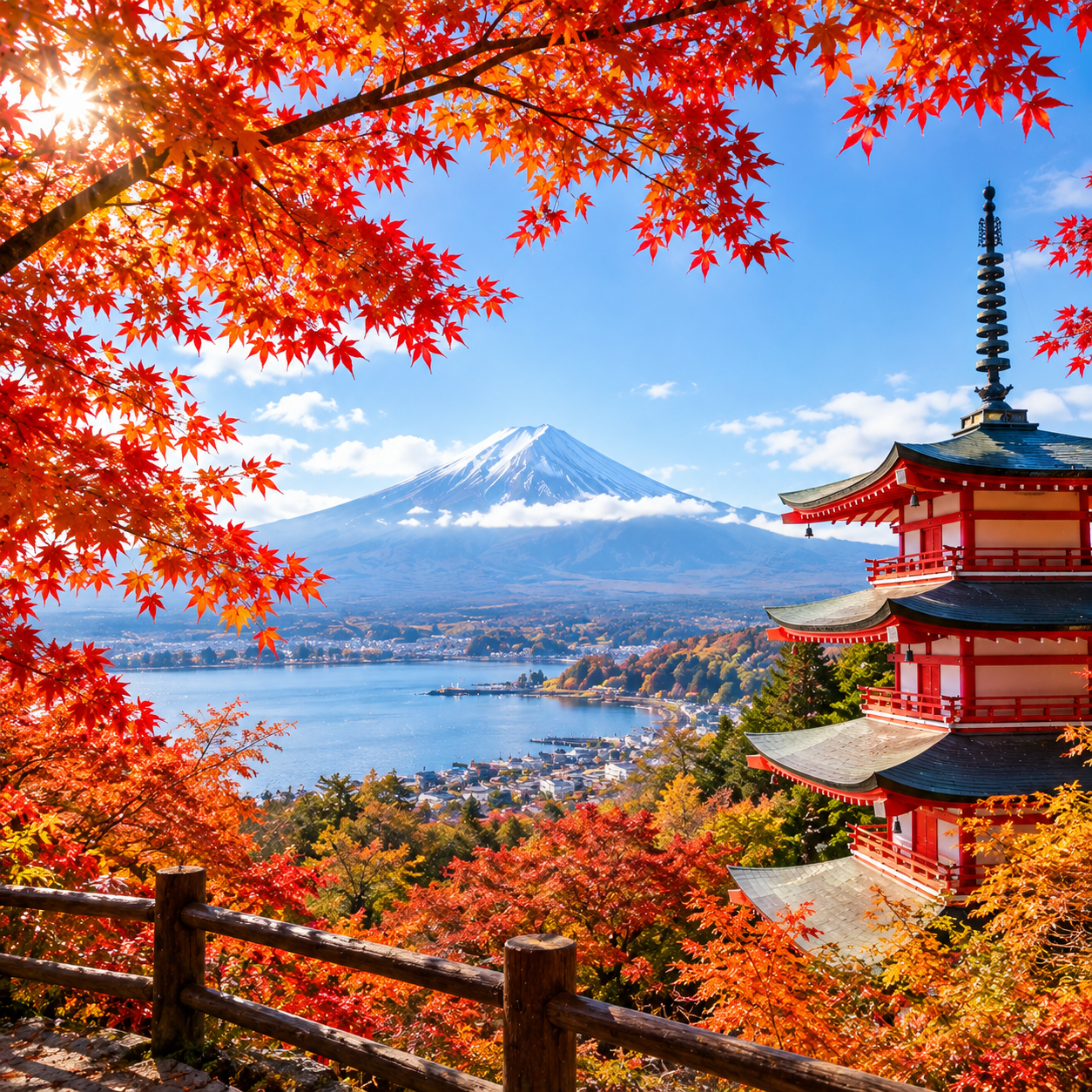
September–November
Average temperature: approximately 18℃
The season of autumn foliage, with generally pleasant and comfortable weather.
Winter
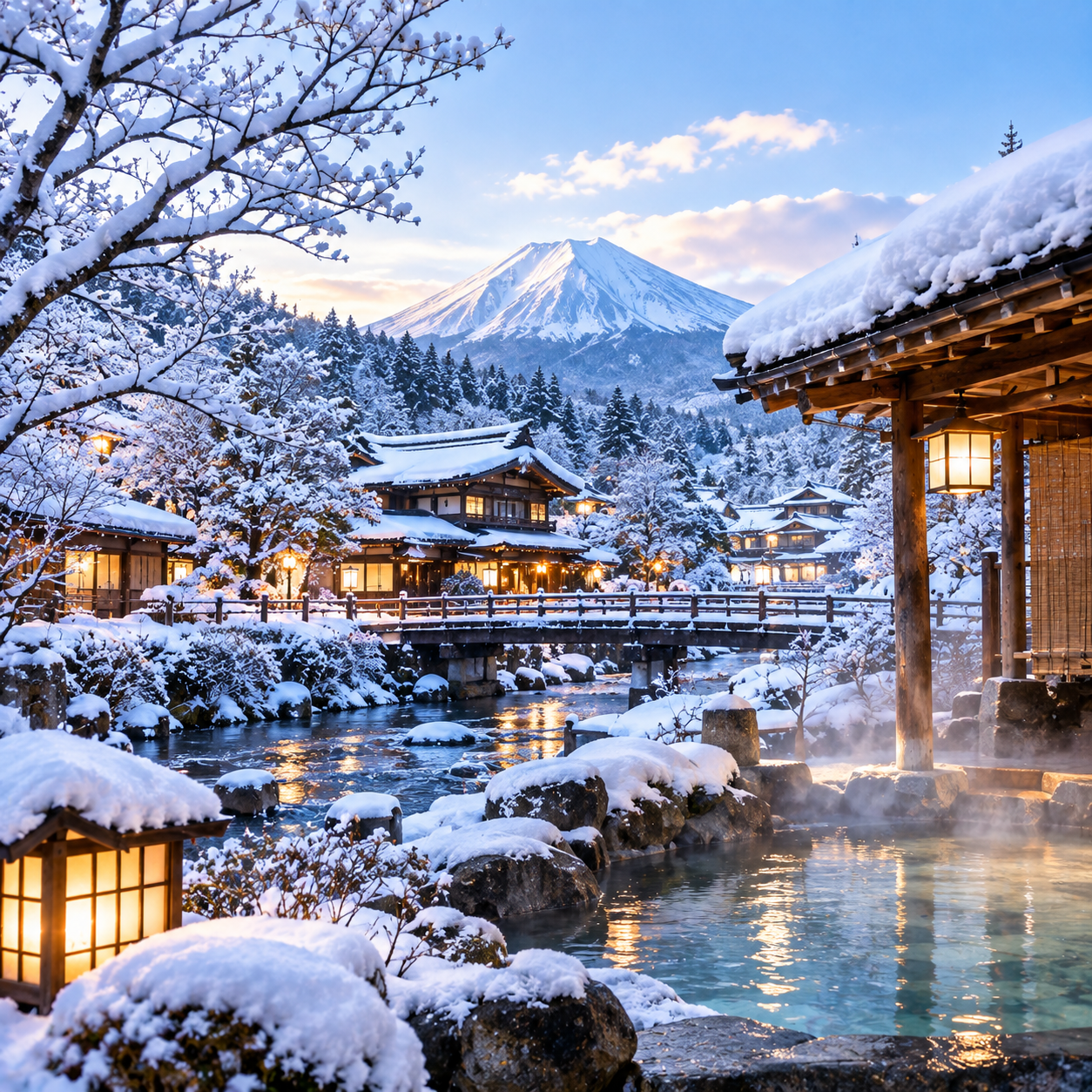
December–February
Average temperature: approximately 5℃
Some regions experience significant snowfall, so warm clothing is essential.
Visas & Entry Requirements
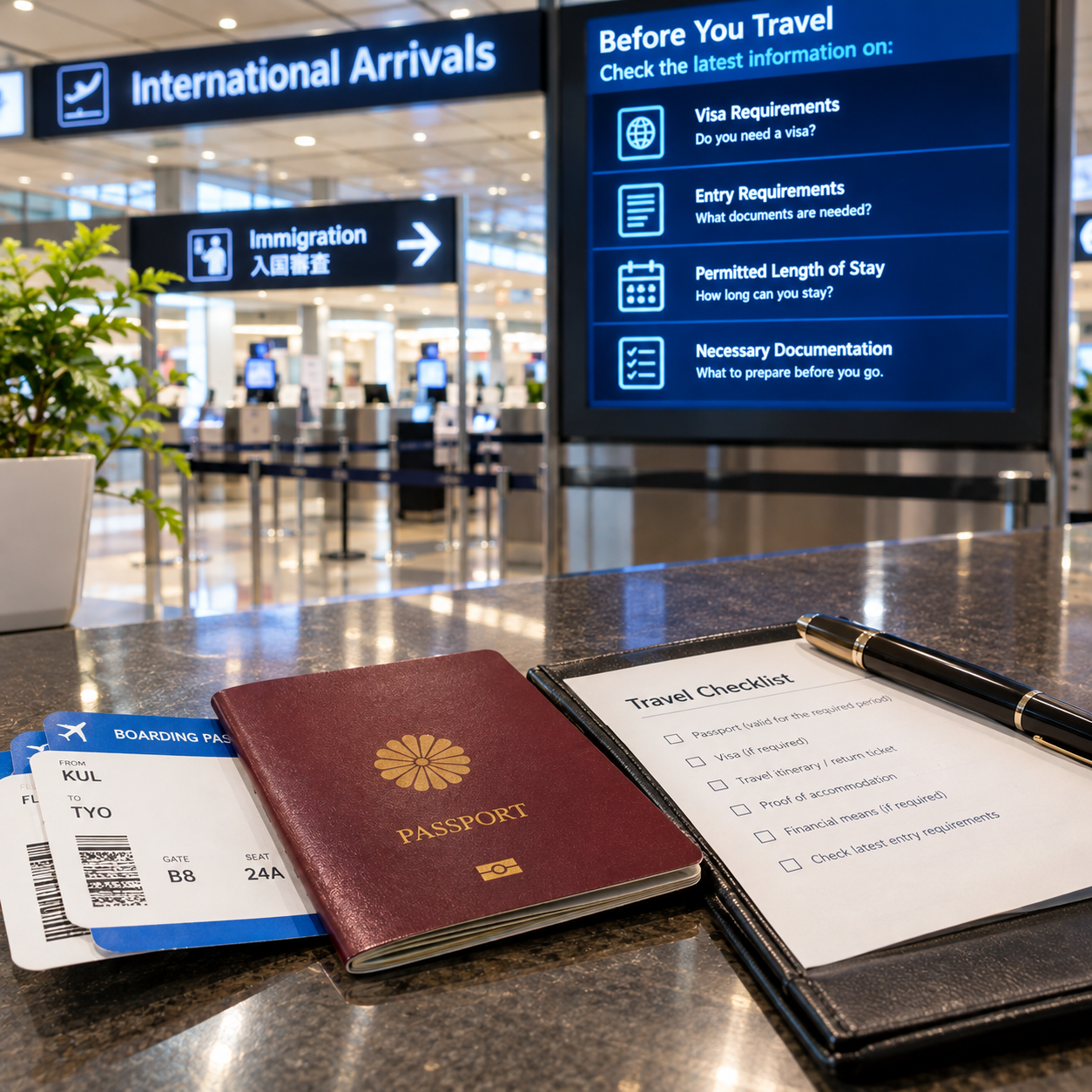
Visa requirements vary depending on nationality, and some travelers may be eligible for visa exemption. Please check the latest entry requirements, permitted length of stay, and necessary documentation before travelling.
Staying Connected
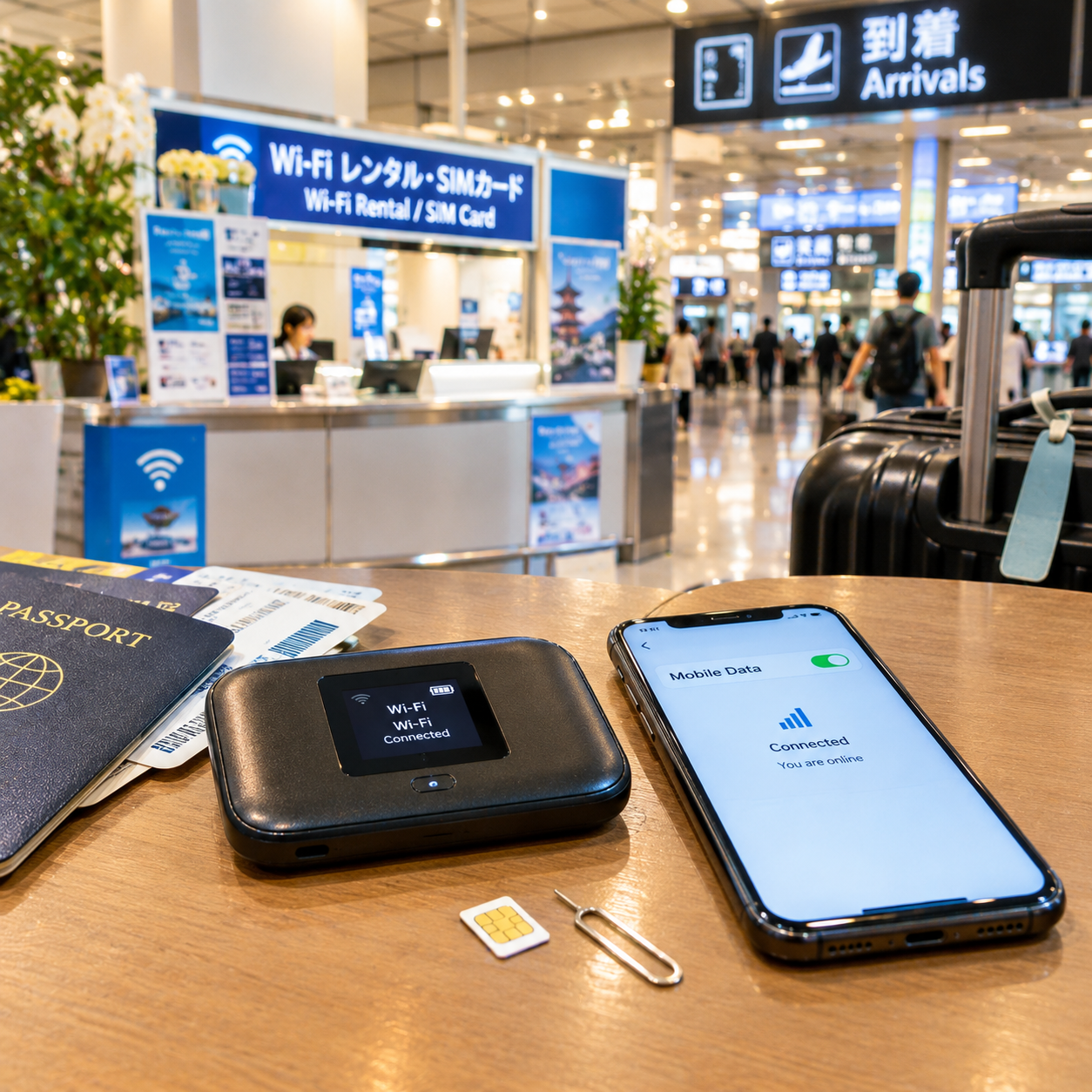
Portable Wi-Fi routers and SIM cards are commonly used by international visitors. These can be rented or purchased at airports or arranged in advance.
Currency
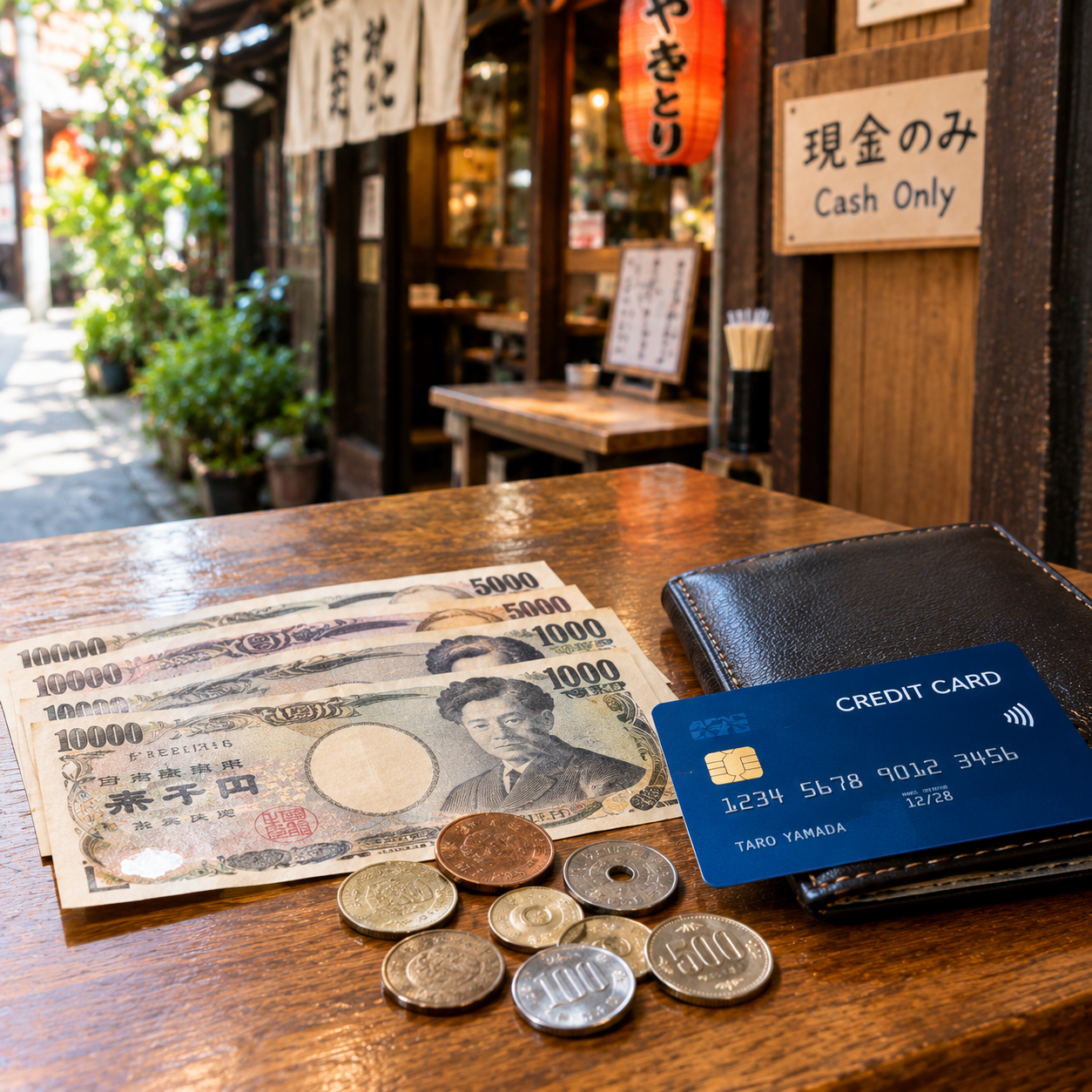
The currency used in Japan is the Japanese Yen (JPY).
While credit cards are increasingly accepted, some smaller shops and restaurants still accept cash only. We recommend carrying a reasonable amount of cash during your stay.
Time Zone
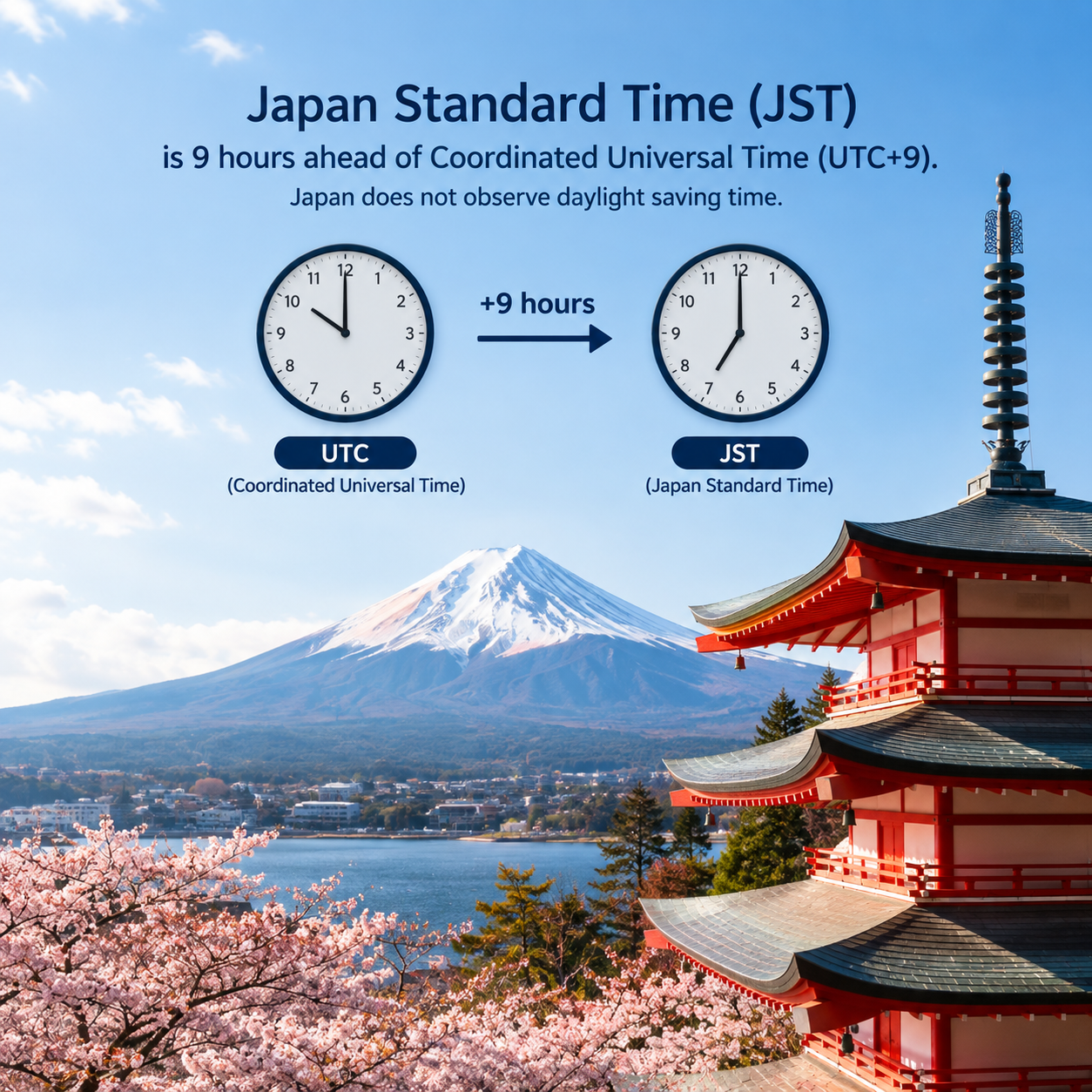
Japan Standard Time (JST) is 9 hours ahead of Coordinated Universal Time (UTC+9). Japan does not observe daylight saving time.
Electricity & Plugs
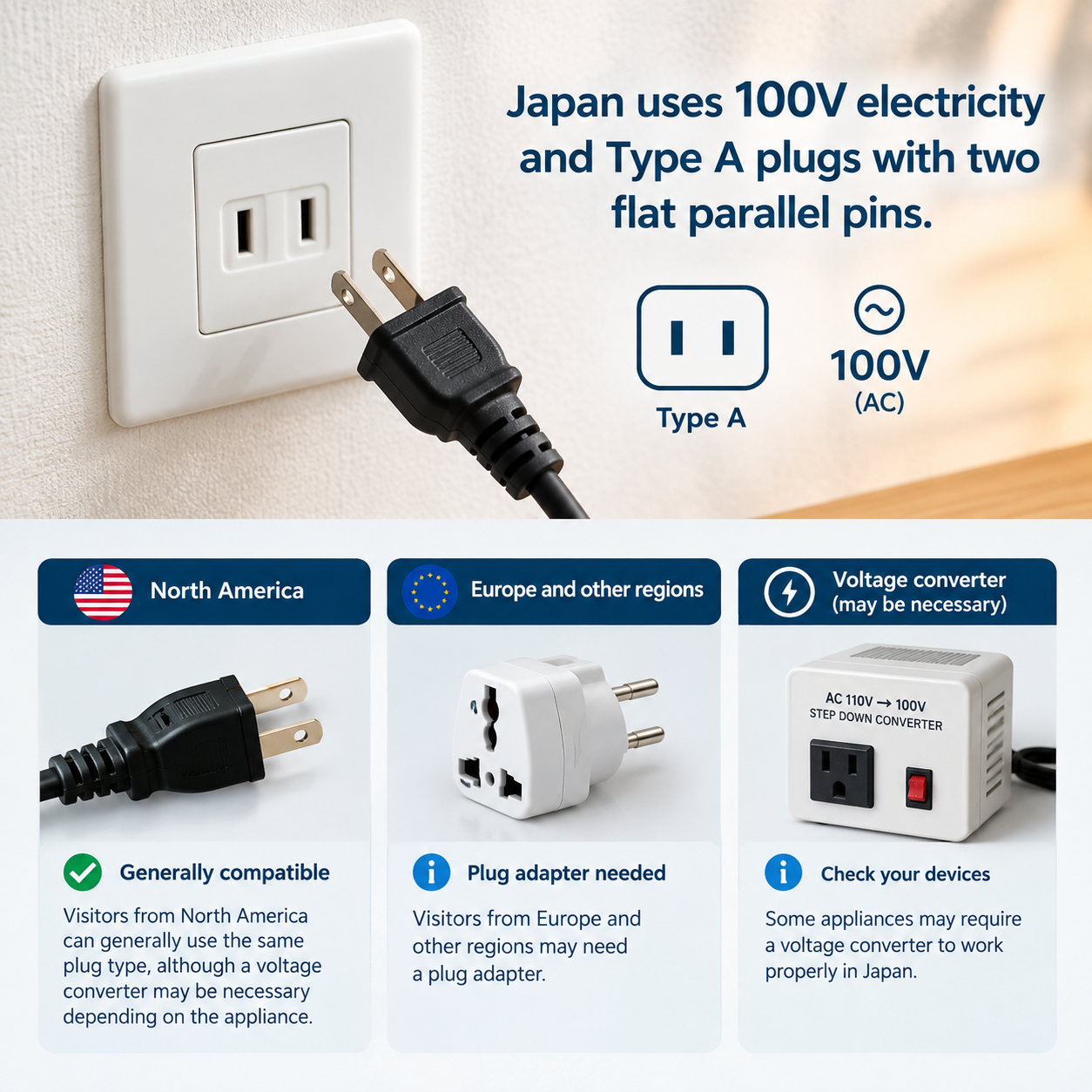
Japan uses 100V electricity and Type A plugs with two flat parallel pins.
Visitors from North America can generally use the same plug type, although a voltage converter may be necessary depending on the appliance. Visitors from Europe and other regions may need a plug adapter.
Driving in Japan
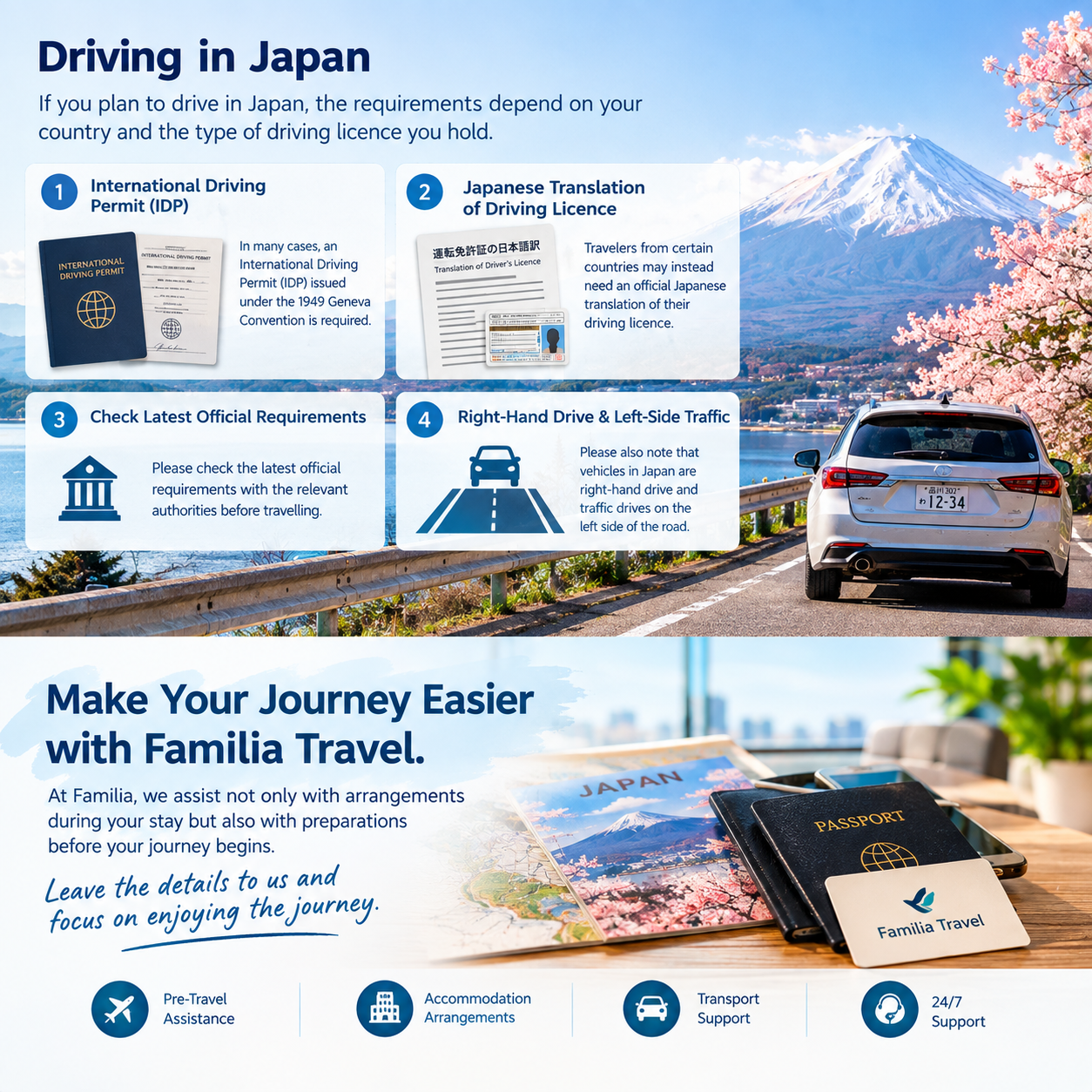
If you plan to drive in Japan, the requirements depend on your country and the type of driving licence you hold.
In many cases, an International Driving Permit (IDP) issued under the 1949 Geneva Convention is required. Travelers from certain countries may instead need an official Japanese translation of their driving licence.
Please check the latest official requirements with the relevant authorities before travelling. Please also note that vehicles in Japan are right-hand drive and traffic drives on the left side of the road.
Make Your Journey Easier with Familia Travel.
At Familia, we assist not only with arrangements during your stay but also with preparations before your journey begins.
Leave the details to us and focus on enjoying the journey.
Demo | Before Your Travel