Horse Racing

Thoroughbred Racing & Breeding

Japanese thoroughbred racing has been steadily increasing its presence on the global racing stage, accompanied by a growing international following for Japanese racing. Japanese racing has reached an exceptionally high standard in recent years, producing world-class champions such as Forever Young, Equinox, Liberty Island, Loves Only You, Lys Gracieux, and Deep Impact.

These racehorses are bred and raised in Hokkaido, the heartland of Japan’s thoroughbred breeding industry, before being trained at the JRA training centres in the eastern region (Miho) and western region (Ritto).

The JRA (Japan Racing Association) operates Japan’s central horse racing circuit and is renowned not only for the quality of its racing but also for the world-class quality and elegance of its racecourse facilities. The JRA operates ten racecourses across Japan, including venues in Tokyo, Hokkaido, Kyoto, and Osaka, with racing held every weekend.

In addition, NAR (National Association of Racing), which oversees local horse racing, hosts night racing at racecourses across Japan. These meetings offer a lively yet more casual atmosphere, providing a different experience from JRA racing.

Hokkaido is also home to a unique form of Japanese horse racing known as Ban’ei Racing, held in Obihiro. Unlike conventional racing, where thoroughbreds compete for speed on turf or dirt tracks, Ban’ei Racing features powerful draft horses pulling heavy iron sleds weighing several hundred kilograms along a straight course of approximately 200 metres, including two large uphill obstacles. One of the most dramatic moments comes as the horses pause to gather their strength before making a powerful ascent up the second obstacle, with jockeys carefully judging their breathing, strength, and pace. The experience is entirely different from conventional horse racing and offers a remarkable display of strength and endurance.

Beyond the Racecourse
The experience of Japanese thoroughbreds extends well beyond the racecourse. Located in Tomakomai, Hokkaido, Northern Horse Park is an equestrian leisure park operated by Northern Farm, one of Japan’s leading thoroughbred breeding and training operations. Set across approximately 480,000 square metres, the park is home to around 80 horses, including retired racehorses and ponies.

Visitors can enjoy a range of experiences, including interacting with horses, horseback riding, pony shows, and stable visits, while also learning about Hokkaido’s thoroughbred breeding heritage and the lives of horses through exhibitions and educational programmes. The park is also home to many former racing stars who once captivated the racing world.

Since 2025, visitors have also had the opportunity to see Golden Sixty, one of the most celebrated racehorses in the history of Hong Kong racing.

At Familia Travel, we endeavour to create exclusive, tailor-made horse racing experiences according to each guest’s interests and preferences.
Please contact us to discuss a bespoke itinerary designed around your interests.

The Racing Season

Horse racing can be enjoyed throughout the year across Japan. Among the many race meetings, the country’s internationally significant Group One races are particularly compelling, while experiencing racing alongside Japan’s changing seasons offers an especially memorable way to enjoy the sport.

January – March

The Group One February Stakes is held at Tokyo Racecourse in late February, followed by the Group One Takamatsu-no-Miya Kinen at Chukyo Racecourse in late March. For those visiting Japan for a winter ski holiday, combining a stay at a winter resort with an opportunity to experience Japanese horse racing can be a memorable addition to the journey. Alongside time spent at a winter resort, guests can enjoy some of the highest-level racing in Japan, creating a diverse winter experience.

Key races during this period:

  • MonthRaceRacecourseCity
  • February February Stakes Tokyo Racecourse Tokyo
  • March Takamatsu Miyazaki Stakes Chukyo Racecourse Aichi

April – June

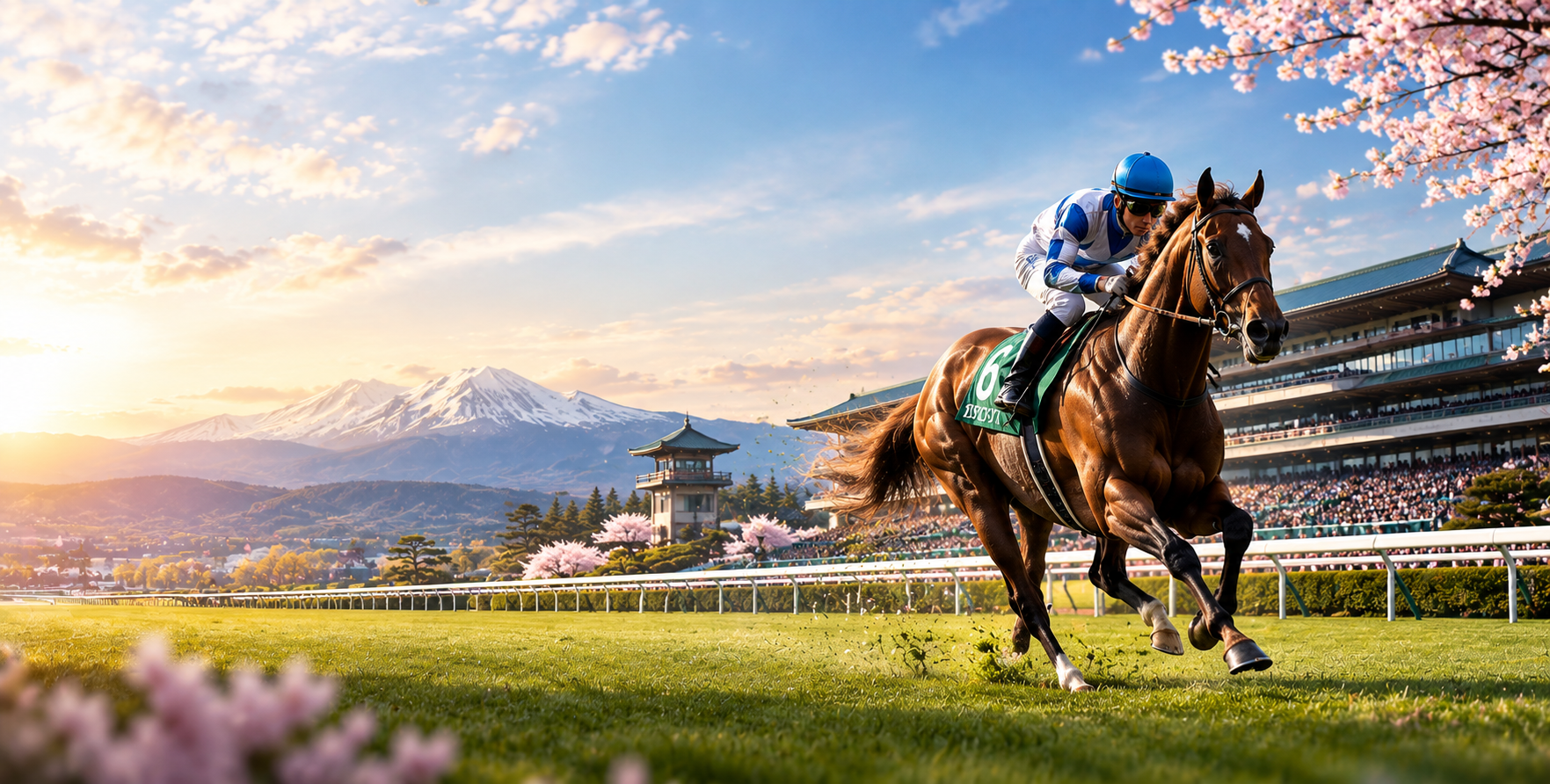
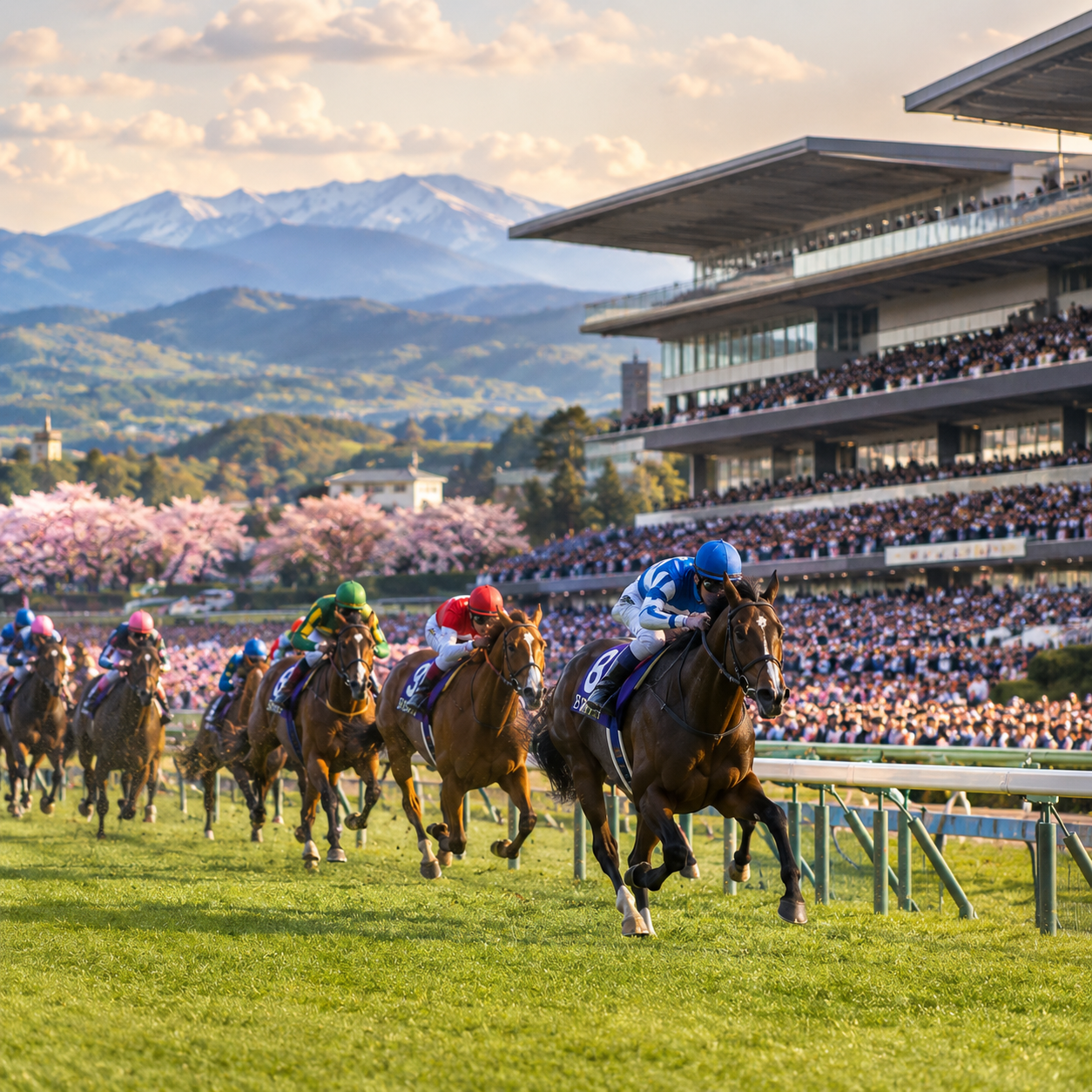
The main Group One season begins in spring. April is particularly beautiful, as several major races coincide with the cherry blossom season, offering the opportunity to experience the excitement of racing against a backdrop of sakura in full bloom.
The Group One Oka Sho (Japanese 1000 Guineas), named after the cherry blossoms, is especially picturesque, with the field racing beneath the cherry trees lining Hanshin Racecourse.

Key races during this period:

  • MonthRaceRacecourseCity
  • April Osaka HaiHanshin RacecourseOsaka
  • April Oka ShoHanshin RacecourseOsaka
  • April Satsuki ShoNakayama RacecourseChiba
  • May Tenno Sho (Spring)Kyoto RacecourseKyoto
  • May NHK Mile CupTokyo RacecourseTokyo
  • May Victoria MileTokyo RacecourseTokyo
  • May Yushun Himba (Japanese Oaks)Tokyo RacecourseTokyo
  • May Tokyo Yushun (Japanese Derby)Tokyo RacecourseTokyo
  • June Yasuda KinenTokyo RacecourseTokyo
  • June Takarazuka KinenHanshin RacecourseOsaka

July – August

During these months, racing moves away from the major metropolitan areas towards regional destinations. Although there are no JRA Group One races during this period, racing can be enjoyed alongside local cuisine and sightseeing across Japan, particularly in Hokkaido at Hakodate and Sapporo, as well as at Niigata, Fukushima, Chukyo, and Kokura.

Hokkaido is particularly appealing during the summer, with relatively cool weather making it an excellent season not only for horse racing but also for visiting equestrian and horsebreeding destinations and enjoying close encounters with horses.

September – October

Racing returns to the major metropolitan areas and the autumn Group One season begins.

The season starts with the Sprinters Stakes in late September, followed in October by the Shuka Sho and Kikuka Sho, the final legs of the three-year-old Triple Crown series, and the Tenno Sho (Autumn), which brings together many of Japan’s leading older horses. Autumn is also a beautiful season to experience Japan, with the leaves beginning to turn from around October.

Key races during this period:

  • MonthRaceRacecourseCity
  • September Sprinters Stakes Nakayama RacecourseChiba
  • October Shuka Sho Kyoto RacecourseKyoto
  • October Kikuka Sho Kyoto RacecourseKyoto
  • October Tenno Sho (Autumn)Tokyo RacecourseTokyo

November – December

The autumn Group One season reaches its peak in November, when Japan’s leading international champions come together for the Japan Cup.

On Japan Cup Day, Tokyo Racecourse takes on an electric atmosphere, with tens of thousands of passionate spectators, traditional chants before the Group One races, and thunderous cheers along the final straight. Watching the Japan Cup at the heart of this passionate racing crowd is an unforgettable experience for any racing enthusiast.

In December, Nakayama Racecourse hosts the Group One Arima Kinen, the grand finale of the JRA season. The field is selected through a public fan vote, and the winner is often regarded as one of the defining champions of the year. Held around the Christmas holiday period, the race regularly attracts a capacity crowd.

The NAR-run Tokyo Daisho-ten is also held at the end of the year. As the major finale of the Japanese dirt-racing calendar, it offers an exciting racing experience amid the lively atmosphere of the year-end season.

Key races during this period:

  • MonthRaceRacecourseCity
  • NovemberQueen Elizabeth II CupKyoto RacecourseKyoto
  • NovemberMile ChampionshipKyoto RacecourseKyoto
  • NovemberJapan CupTokyo RacecourseFuchū
  • DecemberChampions CupChukyo RacecourseAichi
  • DecemberHanshin Juvenile FilliesHanshin RacecourseOsaka
  • DecemberAsahi Hai Futurity StakesHanshin RacecourseOsaka
  • DecemberHopeful StakesNakayama RacecourseChiba
  • DecemberArima KinenNakayama RacecourseChiba
  • DecemberTokyo Daisho-tenOi Racecourse (NAR)Tokyo
Demo | Horse Racing